
Paid Ads · Lead Quality
Why Your Meta Ads Aren't Converting (Home Service Business Edition)
By Kent Dong · Published July 14, 2026 · Updated July 14, 2026
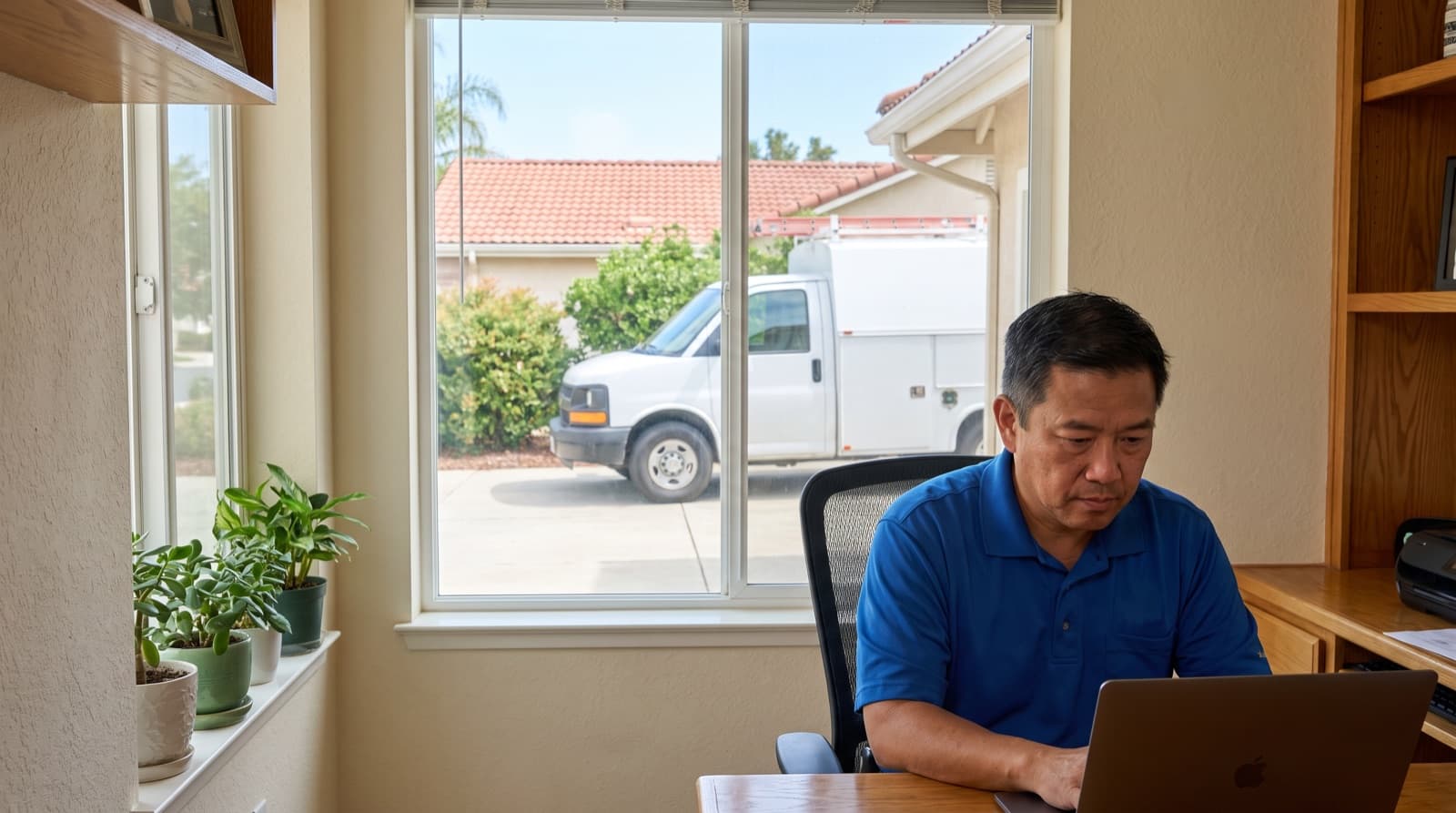
When Meta ads stop converting for a home service business, the cause is almost always one of four things: weak targeting, a hook that doesn't match a real pain point, a broken handoff between ad and landing page, or a follow-up gap after the lead comes in. Diagnosing which one is the first step to fixing it.
"Our ads aren't working" is rarely one problem — it's usually one specific breakpoint in the chain from ad to booked job. Here's how to find it.
Step 1: Check where the drop-off actually happens
| Symptom | Likely cause | Where to look |
|---|---|---|
| Low click-through rate | Weak hook or wrong audience | First 3 seconds of the video, and audience targeting |
| Clicks but no form fills | Landing page mismatch or slow load | Mobile page speed, offer clarity on the page |
| Form fills but no answered calls | Follow-up speed or lead quality | Time-to-first-contact, qualifying questions |
| Leads answer but don't book | Offer or price mismatch | What was promised in the ad vs. what's offered on the call |
The four most common culprits
1. The hook doesn't match a real, specific pain point
"Quality plumbing services you can trust" stops no one from scrolling. "Your water heater dying on a Friday night doesn't have to mean a $2,000 emergency call" does. Generic messaging gets generic (or no) results — specificity is what earns attention in the first three seconds.
2. Targeting is too broad or too narrow
Broad targeting burns spend on people who will never need the service; overly narrow targeting starves the algorithm of data it needs to optimize. For most home service verticals, a mid-radius geographic target (city or a cluster of nearby cities) combined with interest and behavior signals — not just "homeowners" — performs best.
3. The landing page breaks the promise
If the ad promises a fast, simple quote and the landing page is a 12-field form or a slow-loading site, the lead abandons before converting. The page should mirror the ad's offer almost word for word, load fast on mobile, and ask for the minimum information needed to start a conversation.
4. Follow-up is too slow
A lead that isn't contacted within minutes often becomes a competitor's customer. Response speed is frequently the actual reason a "bad ad" looks bad — the ad worked, but the lead went cold before anyone called. A same-day SMS the moment a form is submitted, followed by a structured call sequence, closes leads that a delayed follow-up loses outright.
Give it enough data before judging
New ad sets need a learning period — typically around 50 conversion events — before Meta's delivery algorithm stabilizes. Judging performance, or killing an ad, before that point usually means reacting to noise instead of a real trend.
The fix isn't always "better creative"
The instinct when ads underperform is to reshoot better video. Sometimes that's right — but just as often the actual leak is in targeting, the landing page, or follow-up speed, and no amount of better creative fixes a broken handoff downstream of the click.
FAQ
Usually a mismatch between the ad's promise and the landing page or form — either the offer isn't clear on the page, the form asks for too much too soon, or the page takes too long to load on mobile.
Most often the targeting is too broad, the creative doesn't include a clear pain point or hook, or the offer isn't compelling enough to justify filling out a form versus just calling a competitor.
Give a new ad set a minimum of 50 to 100 clicks or a week of consistent spend before judging performance — smaller sample sizes make it impossible to tell signal from noise.
Not immediately. Meta's algorithm needs a learning period (typically about 50 conversion events) to optimize delivery — killing ads too early resets that process and wastes the spend already invested.

Kent Dong
Founder & Lead Strategist, KVM Creative Agency