
Trust & Reputation · Local Search & Reviews
Why the Best Contractor Doesn't Always Win the Job
By Kent Dong · Published August 24, 2026 · Updated August 24, 2026
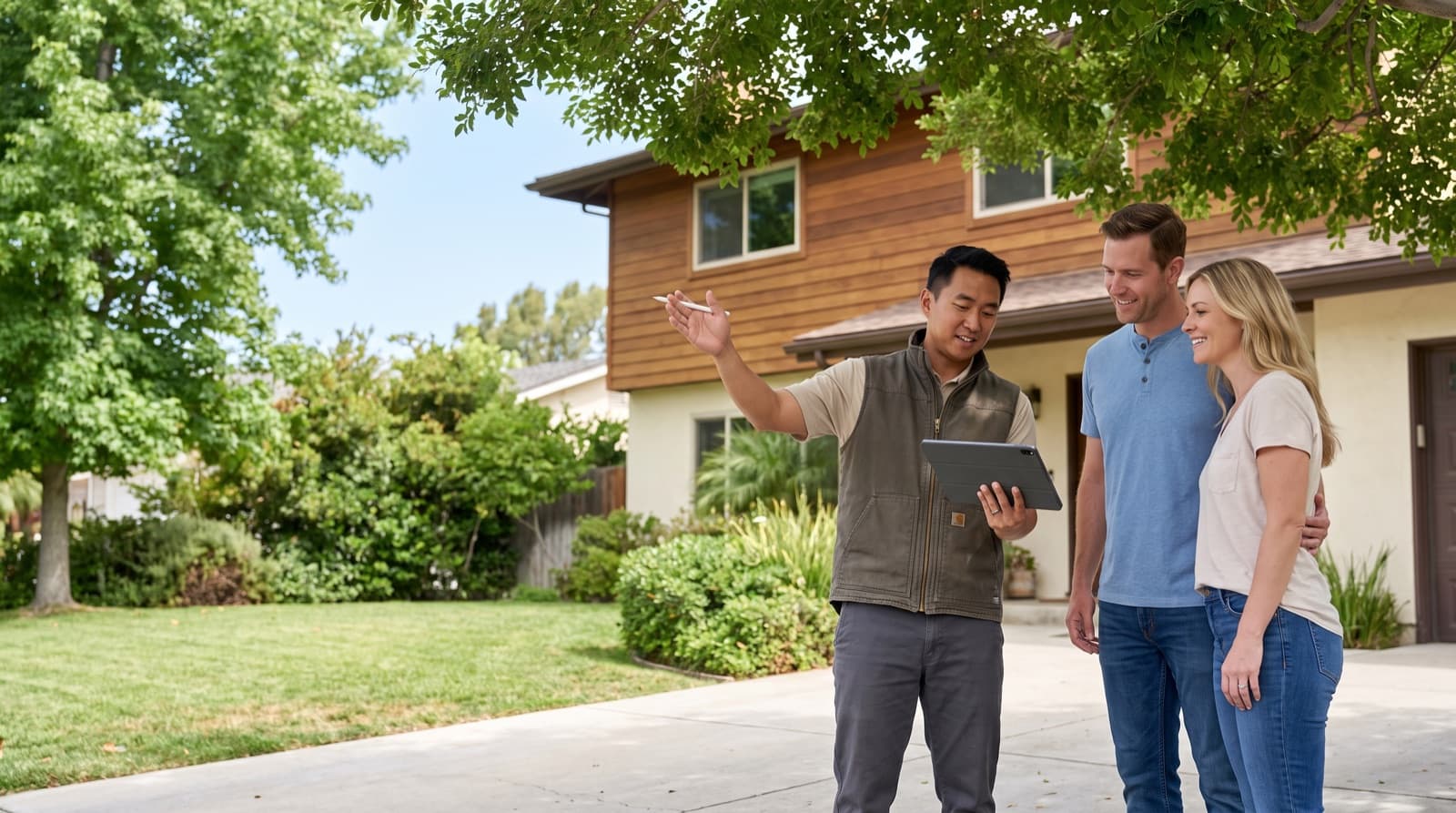
A homeowner choosing a contractor cannot evaluate the work. So she evaluates what she can see: reviews, visible projects, responsiveness, and how the whole interaction feels. Being the best is a fact about your work. Being chosen is a fact about what a stranger can verify.
Two contractors bid on the same kitchen.
Contractor A has been doing this for 25 years. His work is genuinely phenomenal — the kind of finish carpentry other contractors notice. He's honest, he doesn't cut corners, and he'll tell a homeowner when a project isn't worth doing. He has 31 Google reviews, most of them from a few years back. His website has a photo gallery he last updated when his nephew built the site. He returns calls in the evening, when he's off the jobsite.
Contractor B has been in business six years. The work is fine. Good, not remarkable. But he has 150 reviews, and eleven of them are from the last two months. His Instagram shows a project walkthrough every week — real spaces, before and after, him explaining what they solved. His website loads fast and shows fourteen finished kitchens with the city and the scope listed. When you fill out his form, a text arrives in ninety seconds and he calls within ten minutes. He shows up to the estimate with a folder and leaves a written quote in four days.
The homeowner hires Contractor B.
And here's the uncomfortable part: she wasn't wrong.
She isn't choosing craftsmanship — she can't
This is the thing experienced contractors find hardest to accept, and it's not an insult to homeowners.
She cannot evaluate your work. She has no framework for it. She can't look at two quotes and tell that one of you plans to shim the cabinets properly. She can't tell that your tile layout starts from the focal point instead of the corner. She doesn't know what a scribe is.
She's not being shallow by ignoring your 25 years. She's being rational with the information available to her, and the information available to her is:
- Do other people say this went well? (reviews)
- Have they done work that looks like what I want? (visible projects)
- Do they seem organized and reliable? (response speed, written quote, process)
- Do I feel comfortable with this person in my house for six weeks? (how they talk, how they show up)
Every one of those is a proxy for competence. She's using proxies because she has no access to the real thing. So the contractor who performs better on the proxies wins — regardless of who's better at the actual work.
What she's really buying
Nobody buys a kitchen remodel. They buy the belief that this will go okay.
Because she has heard the stories. Everyone has. The contractor who disappeared mid-project. The bid that grew by $18,000. The three weeks without a kitchen that turned into four months. Those stories are why she has been putting this off, and they're what she's actually trying to avoid.
So the question in her head isn't "who's the better builder?" It's "which of these two is less likely to become one of those stories?"
Contractor B answers that question dozens of times before they ever meet. A hundred and fifty people said it went fine. Fourteen finished kitchens sit on the page. He answered in ninety seconds, which suggests he'll answer when something goes wrong. The written quote in four days suggests he's organized.
Contractor A's answer to that question is "trust me, I've been doing this 25 years." Which is true, and which is exactly what the guy who disappeared mid-project also said.
This is what visibility actually is
Marketing has a reputation among tradespeople as fluff — the thing companies do instead of doing good work. Sometimes it is.
But look at what Contractor B actually did. He didn't invent anything. He didn't claim skills he doesn't have. He photographed real projects. He asked customers who were happy to say so publicly. He answered the phone. He explained his process.
Every one of those is just making real things visible.
Contractor A does the same quality of work — better, even. He simply leaves no evidence behind. Twenty-five years of excellent kitchens exist in the world and almost none of them exist anywhere a stranger can find them. His experience is real and completely unverifiable, which for decision-making purposes means it isn't there.
This is why the "good work speaks for itself" idea fails. Good work speaks for itself to the person who received it. To everyone else, it's silent unless someone records it.
Why this is getting more urgent
There's a real shift happening in the trades right now. Contractors, electricians, plumbers, and roofers are using their actual work as social content — and it turns out that work is genuinely compelling to watch. Demolition, discovering rot behind a wall, a bathroom going from gutted to finished in ninety seconds.
That's not a fad. It's a category of business discovering that its daily work is inherently interesting, and that a phone is enough to capture it.
The consequence for everyone else is that the bar moved. A homeowner comparing three contractors today will likely find at least one who has documented dozens of projects. Against that, "we've been serving Orange County since 1999" and a gallery of eight photos doesn't read as established. It reads as inactive.
What to actually do about it
None of this requires becoming a marketer. It requires leaving evidence.
Photograph every job. Before, during, after. A phone is fine. Ninety seconds per visit. This is the single highest-return habit available to a contractor, and it costs nothing.
Ask every customer for a review, every time. Not when you remember — as a fixed step in closing out a job. A contractor with a decade of happy clients and 31 reviews has asked maybe 5% of them.
Answer fast. Speed is read as reliability, and it's the only performance signal a homeowner gets before they hire you.
Show the process. Most fear around hiring a contractor is uncertainty about what happens next. Write down the steps. Put them on the page. It's free and almost nobody does it.
Put your face on it. She's choosing who to let into her house. Let her see you first.
The reframe
Being the best is a fact about your work. Being chosen is a fact about what a stranger can verify about your work before they've met you.
Those are two different problems, and the second one is entirely solvable — not by becoming a different company, but by leaving evidence that the company you already are exists.
FAQ
Because homeowners can't evaluate craftsmanship — they have no way to judge whether one contractor's work is better than another's. So they evaluate what they can see: reviews, visible completed projects, responsiveness, and how professional the whole experience feels. Whoever wins on those wins the job.
It can be, and that's exactly why good companies should take it seriously. If the only businesses making their work visible are the ones with the most to gain from a polished image, homeowners get a distorted picture of the market. Visibility is how a genuinely good company stops losing to a better-marketed one.
By making the experience visible instead of assuming it's implied. Photograph and film real projects, ask every customer for a review, respond to inquiries within minutes, and explain your process in plain language. None of that requires changing how you build — only that you stop hiding the evidence.
They're one of the few pieces of evidence a homeowner can actually evaluate before hiring. When two contractors look similar on everything else, the one with more recent, more detailed reviews from nearby customers is the safer-feeling choice — and that's usually how the decision gets made.

Kent Dong
Founder & Lead Strategist, KVM Creative Agency