
Local Search & Reviews · Paid Ads
Marketing a New Dental Practice Location in Orange County
By Kent Dong · Published July 28, 2026 · Updated July 28, 2026
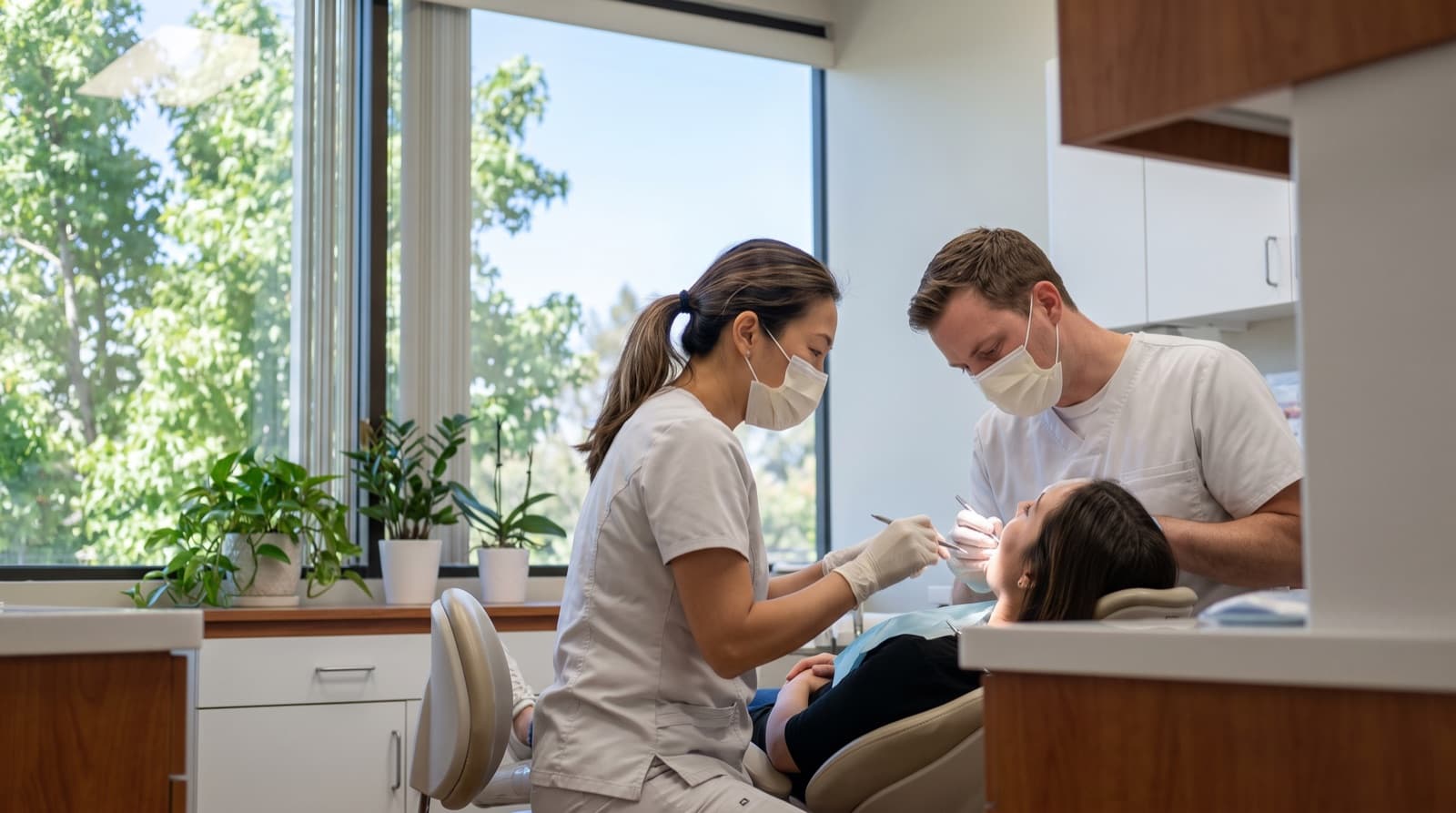
A new dental practice location needs its own local marketing identity — a distinct Google Business Profile, geo-targeted paid ads, and trust-building video content — because reputation, reviews, and local search rankings don't transfer from an existing location a few miles away.
Opening a second (or third) location is one of the more expensive bets a dental practice makes, and the most common mistake isn't the buildout or the staffing — it's assuming the marketing will take care of itself because the brand already exists somewhere else. It won't. A new address is a new local business in the eyes of Google, in the eyes of insurance directories, and in the eyes of every patient who's never heard of you.
Why a new location is a different marketing problem
An established practice has a bank of reviews, a Google Business Profile with years of history, and a stream of referrals from existing patients. A new location has none of that on day one. It's effectively a startup wearing a familiar name — and it needs to be marketed like one, not like an extension of a practice that already has trust built up.
That distinction matters because it changes what you lead with. An established office can lead with "trusted by thousands of families since 2010." A new office has to lead with something else entirely: the space itself, the team, the convenience of the location, and a reason to be the first patient through the door rather than the ten-thousandth.
What needs to be running before you open
| Timeline | What to have in place | Why it can't wait |
|---|---|---|
| 90 days out | Google Business Profile created and verified at the new address | Address verification and initial ranking authority both take real time to build |
| 60 days out | Local SEO basics — location page on your site, NAP consistency across directories | Search engines need a crawl-and-index cycle before a new page ranks for anything |
| 30 days out | Geo-targeted paid ads live, new-patient offer defined | This is what actually fills the first month's schedule — SEO alone won't be ranked yet |
| Opening week | Doctor and team intro video, photos of the finished space | First-time patients are choosing a stranger; a face and a real space lower that risk |
Practices that wait until opening week to start any of this are, in effect, opening with an empty schedule and hoping word of mouth catches up. It eventually does — but "eventually" can mean months of underutilized chairs and staff.
Building trust with zero reviews
The single biggest disadvantage a new location has is the absence of social proof. No reviews, no "voted best dentist" badges, nothing a prospective patient can point to and say "other people trust this place." The fix isn't waiting for reviews to accumulate — it's substituting a different kind of trust signal in the meantime.
That usually means video: a short piece introducing the dentist and the team by name and face, a walkthrough of the actual treatment rooms and waiting area, and — if there's a parent practice — an explicit mention of it ("part of the [Practice Name] family, now in [City]") to borrow credibility honestly rather than pretending the new office has years of history it doesn't have.
Geo-targeting is doing the heavy lifting early on
Paid advertising for a new location should be tightly geo-fenced to the actual service radius — typically a 5 to 10 minute drive time — rather than run at the same broad radius you might use for an established practice with a wider existing patient base pulling from further out. The ad itself should carry three things a brand-new local business needs to say clearly: that you're new and accepting patients, what insurance you take, and a specific, time-bound reason to book now rather than later (a new-patient exam offer works well here).
Common mistakes practices make opening a second location
The most frequent one is treating the new location's marketing as an afterthought to the buildout — hiring contractors and staff months in advance, then thinking about patient acquisition two weeks before opening. The second most common is running the exact same ads and offers as the original location without adjusting geography, which wastes spend reaching people who are closer to the original office and were never going to switch.
A third, quieter mistake is under-resourcing the front desk for the ramp-up period. A new location's ads and local SEO can work exactly as intended and still underperform if calls go to voicemail or online booking requests sit unanswered for a day — the same fast-follow-up principle that determines close rate on any lead applies just as much to a dental front desk as it does to a contractor's sales team.
Handling cannibalization with your existing patient base
Practices opening a second location are often quietly worried about a different problem: pulling existing patients away from the original office instead of genuinely adding new ones. It's a fair concern, and it's worth addressing directly in both the geo-targeting and the messaging rather than ignoring it.
The geo-fencing itself does most of the work here — targeting the new location's ads to the area actually closer to it, rather than the whole regional patient base, naturally biases the campaign toward genuinely new patients instead of existing ones simply choosing the more convenient office. Where some overlap does happen, it's rarely a net loss: a patient switching to the closer location frees up a chair at the original office for someone else, and total practice-wide patient volume still grows. The metric that matters is combined patient volume across both locations, not protecting each location's number in isolation.
Choosing the new-patient offer
The offer attached to opening ads matters more for a new location than it does for an established one, because it's often the deciding factor between "I'll check them out" and "I'll wait and see." A specific, dated offer — a new-patient exam and X-rays at a set price, valid through a real deadline — consistently outperforms a vague "new patients welcome" message, because it gives someone an actual reason to act during the exact window the practice most needs bookings: the first few months after opening.
Getting to a full schedule faster
The practices that reach capacity fastest at a new location treat the first 90 days as their own dedicated campaign — separate Google Business Profile, separate geo-targeted ads, separate trust-building content — rather than folding it quietly into whatever marketing is already running for the existing practice. Given a real budget and a real timeline, most new dental locations can reach a workable patient volume within the first one to two quarters instead of drifting toward it over a year.
FAQ
60 to 90 days before opening. Google Business Profile listings and local SEO both need lead time to gain any authority, and you want a waitlist of interested patients ready to book the week the doors open — not a marketing plan that starts on opening day.
Only partially. Google treats each physical address as its own local entity for ranking and reviews, so a five-star reputation at one location doesn't transfer to another a few miles away. It can accelerate patient trust once they find you, but it won't make them find you.
Geo-targeted paid ads (Meta and Google) aimed specifically at the new location's service radius, combined with a new-patient offer and insurance-accepted messaging. Organic local SEO matters long-term, but it's too slow on its own to fill a schedule in the first 60 days.
Yes. An established practice can lead with patient testimonials and years-in-business trust signals. A new location has none of that yet, so the creative needs to do more work — showing the actual space, introducing the doctor and team on camera, and leading with convenience and newness as the selling point.

Kent Dong
Founder & Lead Strategist, KVM Creative Agency